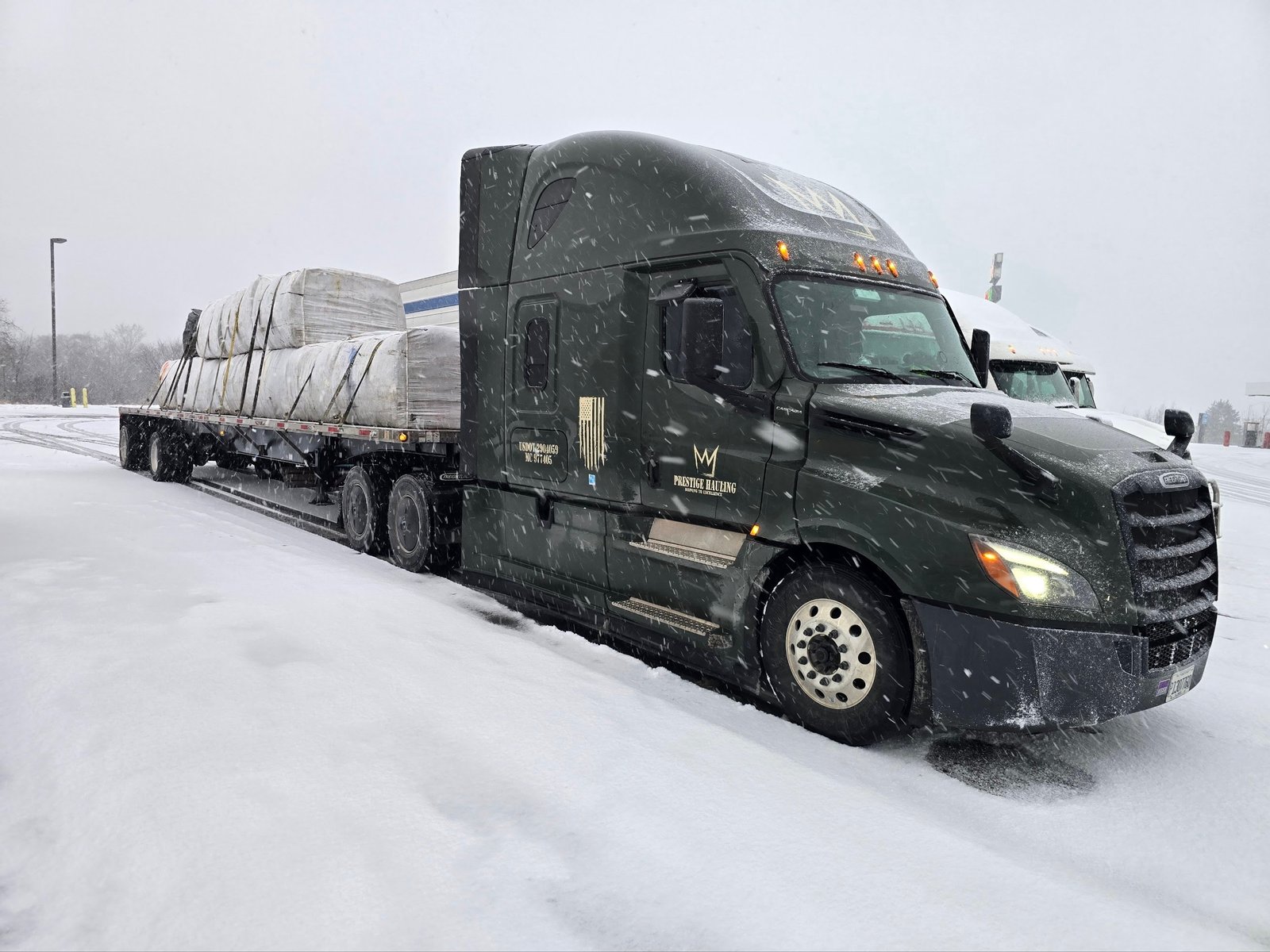
Winter Flatbed Securement Checklist For Safer Hauling
For flatbed drivers, cold weather creates problems that are easy to overlook when you're trying to stay on schedule. Straps can become harder to handle, metal components may be covered in ice, and snow can hide damaged equipment or make it difficult to inspect the trailer properly.
There is also the added challenge of changing road conditions. Snow, freezing rain, and temperature fluctuations can affect your cargo and the equipment holding it in place. A load that was properly secured at pickup still needs to be monitored throughout the trip.
Winter flatbed hauling requires more attention to preparation and inspection. Drivers need to check their securement equipment, make sure cargo is protected against the elements when necessary, and take the time to verify that everything is properly positioned before departure.
Rushing through these steps to avoid standing in the cold can lead to problems later. A few additional minutes spent checking your load can help prevent shifting freight, damaged cargo, and dangerous situations on the highway.
This winter flatbed securement guide covers the equipment, inspections, and practical precautions drivers should include in their routine before heading out in cold weather.

Essential flatbed securement equipment to inspect
Cold weather can affect the condition and handling of equipment you use every day. Straps that worked perfectly in warmer weather may become stiff, while ice and moisture can make metal components harder to operate. Before loading, take a few minutes to inspect everything you plan to use.
Here are the main items to include in your winter inspection.
-
Straps and tie-downs
Inspect your straps for cuts, fraying, damaged stitching, worn sections, and other signs of deterioration. Pay particular attention to areas that regularly come into contact with sharp cargo edges.
Cold temperatures can make some synthetic materials less flexible. Avoid forcing stiff straps into position or using equipment that shows signs of damage. If a strap is frozen, inspect it carefully and follow the manufacturer's recommendations before putting it under tension.
Make sure your straps are dry, properly stored, and free of ice that could interfere with their operation.
-
Chains and binders
Chains and binders are essential when hauling heavy freight such as steel, machinery, and construction materials. Winter conditions make inspecting them especially important.
Check chains for cracked or damaged links, excessive wear, corrosion, and deformation. Inspect binder handles, hooks, and locking mechanisms to make sure they operate correctly.
Ice buildup can make it difficult to identify damage or properly engage a binder. Clear away snow and ice before inspecting the equipment. Never use excessive force to operate a frozen mechanism, and replace any component that does not function as intended.
-
Edge protectors
Edge protectors help prevent straps and chains from rubbing against sharp cargo edges. They are particularly important when hauling steel, lumber, and other materials that can damage securement devices.
Check them for cracks, broken sections, and excessive wear. Also make sure they are positioned correctly and will not shift during transit.
Winter moisture and freezing temperatures can affect certain materials, so check that your edge protectors remain in good condition and are suitable for the job.
-
Tarps and bungee cords
Flatbed tarps need extra attention during winter because snow, freezing rain, and strong winds can make covering a load more difficult.
Inspect tarps for holes, torn seams, damaged grommets, and worn sections. Check bungee cords and their hooks for stretching, cracking, or other damage. A tarp that is already weakened may not hold up well when exposed to strong winter winds.
Make sure your tarps are dry before storing them whenever possible. Folding and storing wet tarps in freezing conditions can leave you dealing with stiff, difficult to handle material at your next pickup.
-
Winches, hooks, and other hardware
Do not overlook the smaller components of your flatbed securement equipment. Winches, ratchet mechanisms, hooks, and attachment points all need to function properly.
Look for rust, cracks, bent components, and mechanisms that stick or fail to lock securely. Remove ice buildup where necessary and check that moving parts operate according to the manufacturer's instructions.
A quick inspection of these components before loading can help prevent problems when you are already out on the road.
Driver tip: Keep a dedicated winter inspection routine. Checking your equipment before the first snowfall is not enough. Reinspect it regularly throughout the season, especially after hauling in freezing rain, snow, or wet conditions.

How to secure a flatbed load in icy conditions
Having the right equipment is only part of the job. You also need to make sure the trailer, cargo, and securement devices are ready for winter travel. Snow and ice can make it harder to spot problems, so take your time during loading and inspection.
-
Clear snow and ice from the trailer deck
Before loading, inspect the trailer deck and remove accumulated snow, ice, and debris. A slippery deck can make it difficult to position cargo safely and can create dangerous working conditions.
Check the areas where the freight will sit, including the spaces around stake pockets and other securement points. Make sure the equipment you intend to use can be properly attached and operated.
Never assume that a deck is clear just because the visible surface looks dry. Thin layers of ice can be difficult to spot, particularly in shaded areas.
-
Check cargo placement and weight distribution
Cargo needs to be positioned correctly before you start tightening straps or chains. Check its weight distribution against the trailer's capacity, axle limits, and applicable regulations.
Make sure the load is balanced and that individual pieces cannot easily shift during transit. If you are hauling multiple items, check that each piece is properly supported and that there are no unexpected gaps that could allow movement.
Winter roads make this step particularly important. Sudden braking, slippery surfaces, and uneven road conditions can put additional demands on your securement system.
-
Apply the correct tie downs
Choose the appropriate straps, chains, and other devices for the type, weight, and shape of your freight. Follow the applicable cargo securement regulations and make sure the working load limits of your equipment are sufficient for the job.
Pay attention to the number and placement of tie downs. Straps should not be twisted, chains should not have damaged links, and binders should be properly engaged.
A common mistake is assuming that tightening everything as much as possible will make a load safer. Excessive tension can damage equipment or cargo. Follow proper securement procedures instead.
-
Protect the freight against winter weather
If the shipment requires weather protection, inspect your tarps before covering the cargo. Make sure they provide adequate coverage without interfering with the securement system.
Pay attention to exposed areas where snow, rain, or road spray could reach the freight. Secure loose tarp edges and check that bungee cords and attachment points are in good condition.
Remember that tarps are designed to protect cargo from the elements. They should not be treated as substitutes for proper load securement.
-
Perform a final inspection before departure
Once everything is secured, walk around the trailer and inspect the entire load. Check straps, chains, binders, hooks, edge protectors, and tarp attachments.
Look for loose ends, uneven tension, exposed cargo, and anything that might move or come loose during transit. Make sure your lights, reflectors, and other required safety equipment are visible and unobstructed.
Your pre departure inspection should also include checking that all securement devices are compatible with the load and that the arrangement meets applicable regulations.

This load securement checklist is a starting point for your winter routine, not a replacement for the applicable cargo securement regulations or your company's procedures. Always follow the requirements for the specific freight you are hauling.
What to check during winter hauling
Getting the load secured before departure is only the first step. Winter road conditions can change quickly, and a load that looked fine at the shipper may need attention after a few hours on the road.
Snow, ice, road vibration, and changing temperatures can all affect your equipment. Straps may settle as the load shifts slightly during transport, while ice buildup can make it harder to spot loose hardware or damaged components. That is why drivers should treat load inspections as part of the trip, not something they only do before leaving.
-
Recheck your load at the required intervals
Under US federal regulations, drivers must inspect cargo and its securement devices within the first 50 miles after starting a trip. They must also reexamine the cargo and securement devices whenever they change duty status, after three hours of driving, or after 150 miles, whichever comes first. Any necessary adjustments must be made to keep the cargo from shifting or falling from the vehicle. Exceptions apply in certain situations, including some sealed loads and loads that cannot reasonably be inspected.
These requirements are covered under 49 CFR 392.9. Drivers should also follow applicable state requirements and their carrier's inspection procedures.
-
Pay attention to changes in straps and chains
During each inspection, look for straps that have loosened, shifted, or developed visible damage. Check that chains remain properly positioned and that binders and hooks have not moved out of place. If you find a problem, correct it before continuing.
Do not assume that tightening every strap as much as possible is the answer. Securement equipment must be used correctly and within its working limits. Follow the equipment manufacturer's instructions and make sure the load remains properly secured without damaging the freight or the equipment.
-
Look for signs of shifting or weather damage
Take a moment to look over the entire load. Check whether cargo has moved, edge protectors have slipped, or tarps have come loose. Pay particular attention to exposed areas where snow, ice, and road spray can collect.
If you notice unusual movement, damaged equipment, or a problem you cannot safely correct, stop in a suitable location and address it before moving on. Never attempt to inspect or adjust a load while standing in an unsafe roadside position or exposed to passing traffic.
-
Keep your securement equipment accessible
Winter conditions can make roadside adjustments more difficult, especially when you are dealing with frozen straps, wet gloves, or poor visibility. Keep essential flatbed securement equipment organized and accessible so you can inspect it and make necessary corrections without wasting time searching through your storage compartments.
A little preparation before departure makes a difference when conditions deteriorate. It is also one reason regular flatbed securement training matters. Drivers need to know how their equipment works, how to recognize problems, and how to respond safely when something changes during a trip.
Make winter load securement part of every trip
Winter hauling requires more attention to the details that can easily be overlooked during a busy loading day. Snow and ice on the trailer deck, stiff straps, frozen hardware, and changing road conditions can all make securing freight more challenging.
The best approach is to build a consistent routine. Inspect your flatbed securement equipment before loading, make sure the cargo is properly positioned, use the correct tie-downs, and check everything again before leaving the shipper. Once you're on the road, keep up with required inspections and address any issues as soon as it is safe to do so.
For drivers, good flatbed securement comes down to knowing your equipment, understanding the load, and taking the time to do the job properly. Experience helps, but regular training and a reliable load securement checklist help keep those habits consistent, especially when winter conditions make the job harder.
At Prestige Hauling, safe and dependable flatbed transportation starts with the people handling the freight. Drivers who understand their equipment and take load security seriously play an important role in protecting every shipment and keeping the road safer for everyone.